
Anarres and Urras as Opposing Prisons
The DispossessedThe novel compares the visible coercion of Urras with the subtle social pressure of Anarres, refusing to let either world claim freedom without scrutiny.
increasing Bearing strength in each event
 decreasing
Bearing strength in each eventdecreasingUrras Called a Prison
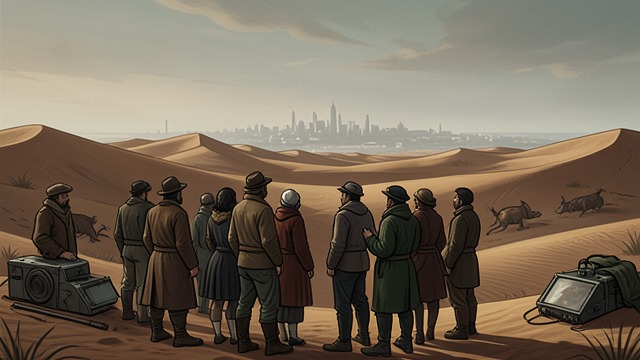
A World Known by Report
Lessons about the propertarians
Shevek and his peers learn to see Urras as corrupt and dangerous through selected images and inherited accounts. The teachings have a practical basis but also encourage fear.
The question of knowledge
Tirin asks how they can know what Urras is really like when contact is so limited. The discussion reveals that isolation can preserve a society while narrowing its understanding.
Urras’s Beautiful Prison

Wealth and Enclosure
Luxury appears liberating
Shevek enjoys the landscape, rooms, food, and intellectual resources of Urras. The world seems to offer freedom through abundance.
Possessors are possessed
He gradually sees that property, money, and status organize people’s choices. The beauty remains, but the social order makes individuals dependent on hierarchy and ownership.
Anarres’s Quiet Prison

Conformity Without Police
Custom limits action
Anarres has no formal government, yet public opinion and institutional routines can restrict work, teaching, and publication. People fear exclusion even when no law threatens them.
Freedom must be practiced
Bedap argues that the social conscience has become a power machine. Shevek resists the claim at first, then recognizes that a society can imprison people through the very relationships meant to sustain them.
The Prison Seen from Below
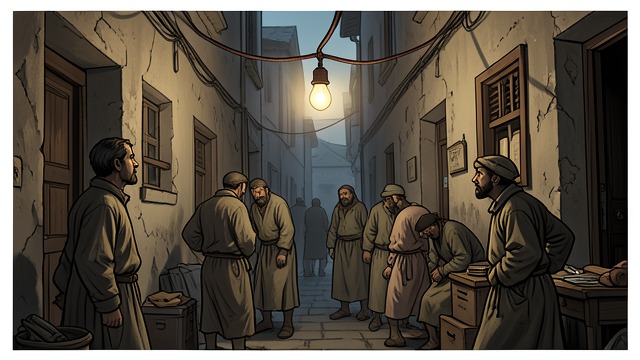
The Hidden Cells of Urras
Poverty behind the package
The city’s poor live among sickness, insecure work, and indifference. Shevek sees the social misery that official tours and academic rooms concealed.
Two forms of coercion
Unlike Anarres’s social exclusion, Urras’s inequalities are reinforced by money, police, and state violence. Shevek rejects the notion that either system is harmless because it uses a different instrument.
A Door Between Prisons
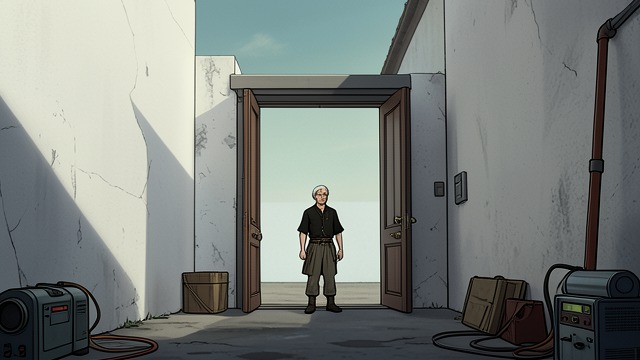
Freedom Beyond Purity
No world is finished
Shevek returns aware that Anarres has its own barriers and that Urras cannot be reduced to its ruling class. Neither society is a final answer.
Contact as a test
Ketho’s landing risks disturbing the established order, but that disturbance is part of freedom. The novel leaves the wall standing as a question people must keep choosing how to cross.
During Shevek’s adolescence
During Shevek’s early months at the university
After Bedap challenges Shevek’s beliefs in Abbenay
After Shevek reaches Old Town
At the ending, as Shevek and Ketho approach Anarres
